Red clay & rust stain removal in Atlanta, GA
Georgia red clay is famous for a reason, and every homeowner in the north Atlanta Piedmont has seen what it does to concrete. The iron-rich Cecil soil under most of Forsyth County and the metro Atlanta suburbs turns driveways, walkways, and the bottom of siding a rusty orange that a normal wash just smears around. That color is not dirt sitting on the surface. It is iron oxide soaked into the pores, and it ignores the surface cleaner and soap that handle pollen and algae. Since 2014, Alexus Pressure Washing has treated red clay and rust staining on concrete, pavers, brick, and siding across Cumming and the north Atlanta corridor. We use oxalic-based removers that dissolve the iron itself instead of scrubbing at it. Red clay and rust stain removal starts at $129. Call (470) 747-6669 for a free look at your surface.
Why Georgia red clay stains concrete, pavers, and siding
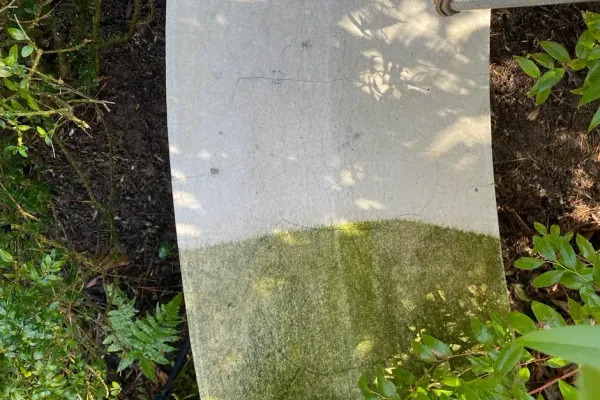
The red in Georgia red clay comes from iron oxide, the same mineral that makes rust orange. Most of metro Atlanta sits on the Piedmont, and the soil under it is the Cecil series, an iron-rich clay that Georgia named its official state soil. Dig anywhere from Cumming to Sandy Springs and you hit it a few inches down. That iron is the whole problem. When rain and irrigation move fine clay particles across a concrete driveway or a paver walkway, the water carries dissolved iron into the surface. Concrete looks solid, but it is full of tiny pores, and it drinks that iron-loaded water like a sponge. As it dries and oxidizes, the iron sets inside the pore structure and leaves an orange or rust-brown stain that gets darker with every storm. North Atlanta homes see this worse than most of the country for a few reasons at once. New construction is everywhere along the GA-400 corridor, and a fresh lot is bare red clay for months before the sod goes down, so rain sheets clay straight across the new driveway. Tires track clay off unpaved edges and back onto the concrete. Graded clay banks and retaining walls bleed rust-colored runoff onto whatever sits below them. Sprinkler heads throw clay-tinted or iron-heavy well water against the lower courses of hardiplank and vinyl siding. None of that is a maintenance failure on your part. It is just what living on red clay looks like, and it is fixable.
Why ordinary pressure washing does not remove red clay
There are two completely different kinds of stains on outdoor surfaces, and they need opposite treatments. Organic stains are the green and black growth, the algae, mildew, and mold. Those are alive, and a soft wash with a sodium hypochlorite blend kills them at the root. Red clay and rust are not alive. They are a mineral, iron oxide, and bleach does nothing to a mineral. You can soft wash a clay-stained driveway all day and the orange stays exactly where it was. Raw pressure does not fix it either. A surface cleaner strips the film of dirt and pollen off the top, but the iron is bonded down inside the pores where the water cannot reach it, so you get a cleaner gray driveway with the same orange ghost baked into it. Homeowners who crank the pressure up to blast the stain out usually just etch and roughen the concrete, which makes it hold dirt faster afterward. The real answer is chemistry, not force. Oxalic acid, the same acid in wood-deck brighteners and hardware-store rust removers, reacts with iron oxide and converts it into a compound that dissolves and rinses off the surface. We apply an oxalic-based remover, let it dwell so it can reach the iron, agitate where the staining is heavy, then flush and neutralize. Fresh clay staining usually lifts completely on the first pass. Deep, years-old rust that has cycled through many wet-and-dry seasons may lighten by most of the way rather than vanish, and we will tell you honestly which one you have before we start.
Driveways, walkways, pool decks, pavers, and siding splashback
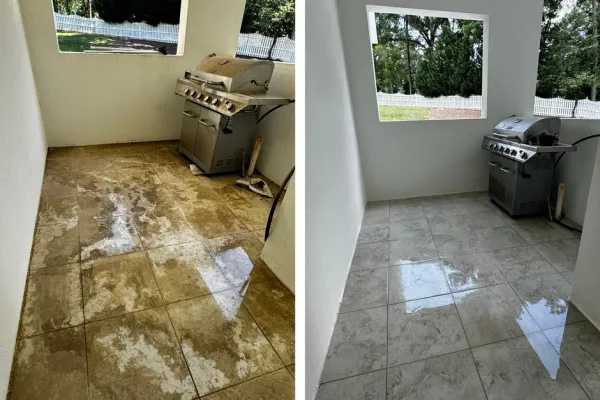
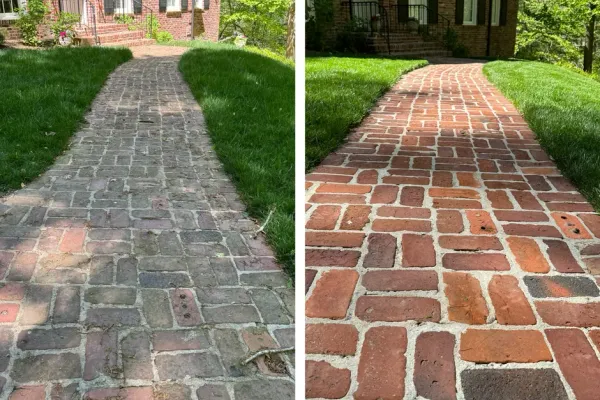
Red clay and rust show up in a handful of predictable places on an Atlanta property, and each surface gets its own approach. Concrete driveways stain worst along the edges and the apron where clay-loaded runoff sheets across, and along the center where tires drag it back and forth. Paver driveways and walkways stain the same way, but they need lower pressure and careful rinsing so the joint sand between the pavers stays put. Pool decks around Forsyth and north Atlanta homes pick up rust rings from metal furniture legs, umbrella stands, and planters, plus the orange tint that iron-heavy well water leaves every time the deck gets wet. Travertine, concrete, and paver pool decks each take a gentler product so the finish and the slip texture survive. Then there is siding. The bottom two feet of hardiplank, vinyl, brick, and stucco catch red clay every time a mower throws it or rain splashes off the mulch bed, and homes on well water often get a rust fan spraying out from a nearby sprinkler head. We treat those lower courses with a rust remover matched to the siding material so we lift the orange without stripping paint. If your driveway needs a full clean along with the stain work, our driveway cleaning page covers the whole process, and pool surrounds are detailed on the pool deck cleaning page.
Keeping red clay and rust from coming back
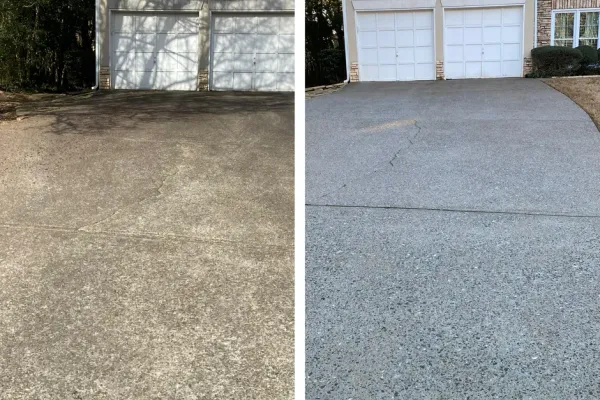
Removing the stain is only half the win. The other half is cutting off whatever put it there, so the orange does not just creep back over the next few seasons. Most red clay and rust staining traces to a source you can actually fix. If a sprinkler head is throwing iron-heavy well water against the driveway or the siding, turning it a few degrees or swapping the nozzle keeps the rust fan off the concrete. If runoff from a bare clay lot or a graded bank is sheeting across the driveway, a gravel border, a French drain, or a downspout extension redirects the flow. On brand-new construction, where the yard is still red dirt waiting on sod, the smart move is a first treatment once the landscaping goes in and the mud stops moving, rather than fighting it every month before then. For concrete that stains again and again, a penetrating sealer put down after the surface is clean and fully dry gives the pores a barrier so iron and oil cannot soak in as easily. We do not apply sealer ourselves, since we stay focused on cleaning, but we prep the surface correctly and point you to sealers that hold up on Georgia driveways. For active problem areas, an annual clay treatment scheduled alongside your regular driveway cleaning keeps staining from ever getting a deep foothold, and it is far cheaper to knock back a light seasonal stain than to break down years of built-up iron. We flag the source on every job, so you leave knowing not just that the stain is gone, but why it happened and how to keep it gone.
What red clay and rust stain removal costs in Atlanta
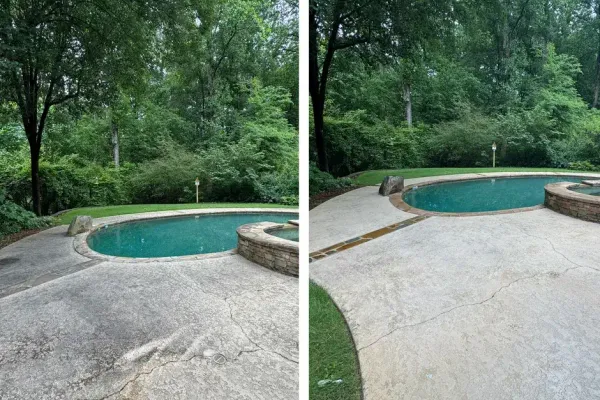
Stain treatment is priced honestly and up front. Red clay and rust stain removal starts at $129 per treatment, which covers the oxalic application, dwell, agitation, and rinse on a defined stained area. A single rust ring on a pool deck or one clay-stained apron is a quick job at that rate. A driveway that is orange from edge to edge is quoted after we see it, because the amount of product and the number of passes depends on how deep the iron has set. The best value is almost always bundling. If we are already at your home cleaning the driveway, priced from $99 for a one-car up to $249 for a four-car, adding a clay treatment to the worst areas costs far less than a separate trip. The same goes for house washing, priced by square footage from $249 up to $599 for a large home, when the staining is sprinkler rust on the lower siding. You can see every rate on the full price list, price your own job in about a minute with the instant estimate tool, and read what actually drives cost in our Atlanta pressure washing cost guide. We cover Cumming, Forsyth County, and the north metro Atlanta suburbs along GA-400, and the estimate is always free. The quote we hand you is the price you pay.
Can you actually remove red Georgia clay stains from concrete?
In most cases, yes. Red clay leaves iron-oxide staining that does not wash out with rain, a hose, or a standard surface cleaner. We use oxalic-based removers that chemically dissolve the iron rather than trying to scrub it off. Fresh clay staining usually lifts completely. Deep stains that have set over several years may lighten by most of the way instead of disappearing, and we give you an honest read on your surface before we start.
Why did my pressure washer or another company fail to get the red out?
Because red clay and rust are minerals, not organic growth. Pressure and the sodium hypochlorite used for algae and mildew do nothing to iron oxide, so a normal wash just cleans the dirt off the top and leaves the orange baked into the pores. Cranking the pressure higher tends to etch the concrete instead of removing the stain. Iron staining needs an acid-based treatment, which is a different product and a different process from ordinary pressure washing.
How much does red clay or rust stain removal cost?
Treatment starts at $129 for a defined stained area, covering the oxalic application, dwell time, agitation, and rinse. A whole driveway that is stained edge to edge is quoted on-site since it depends on how deep the iron has set and how many passes it needs. Bundling the treatment with driveway cleaning ($99 to $249 by size) or house washing ($249 to $599 by square footage) is usually the cheapest way to handle it.
Will the red clay stain come back after you remove it?
The stain we remove is gone. New staining only returns if the source keeps feeding it, such as a bare clay lot next door, a graded bank that bleeds runoff onto the driveway, or a sprinkler throwing iron-heavy well water against the concrete. We point out the source when we spot one so you can redirect a sprinkler head or add a border, and an annual treatment keeps active clay areas from building back up.
Can you get rust and red stains off vinyl or hardiplank siding?
Yes. Rust fans from well-water sprinklers and red clay splashback on the lower siding are common on Forsyth County and north Atlanta homes. We use a rust remover matched to your siding material, whether it is vinyl, hardiplank, brick, or stucco, so the orange lifts without stripping paint or dulling the finish. Sprinkler rust on siding is usually handled as part of a house wash.
Do you remove rust stains from pavers and pool decks?
Yes. Pool decks pick up rust rings from metal furniture, umbrella stands, and iron in well water, and paver walkways stain from clay runoff. We use a gentler oxalic product and lower pressure on pavers and decorative surfaces so the joint sand, the finish, and the slip texture all survive. Travertine, concrete, and paver surfaces each get a product suited to that material.
Get Your Free Red Clay Stain Removal Estimate
Tired of that orange stain no wash seems to touch? Call (470) 747-6669 or email Alexusbestcompany@gmail.com for a free look at your driveway, pool deck, or siding. Family-owned in Cumming since 2014, licensed and insured, with the oxalic treatment that dissolves red clay and rust instead of smearing it around.